
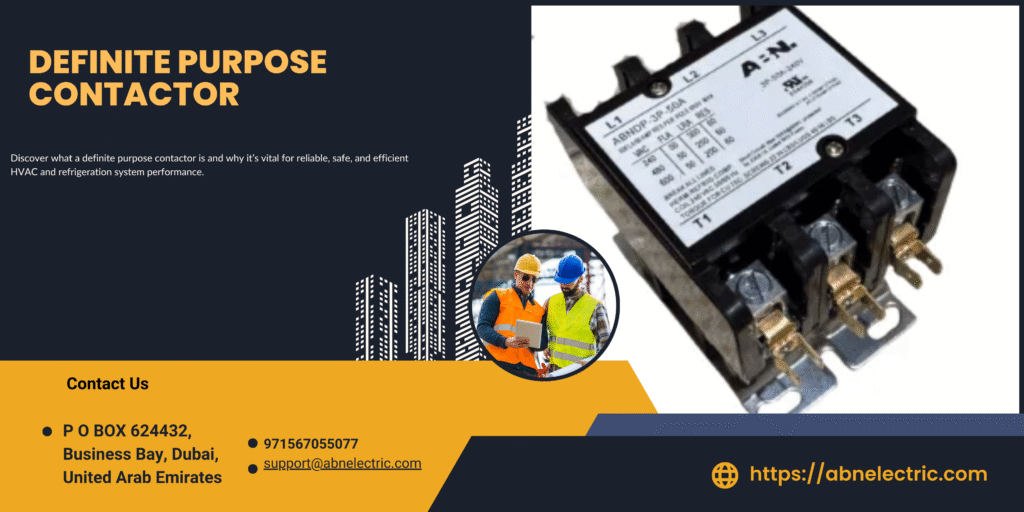
HVAC and refrigeration systems are complex, with many components working together to maintain optimal temperatures. Among the most critical of these is the Definite Purpose Contactor. This specialized electrical switch is the unsung hero that ensures your system runs reliably and efficiently.
This guide will explain what a definite purpose contactor is and why it’s so vital for the performance and longevity of HVAC and refrigeration units. Understanding its function can help you appreciate the engineering that goes into these essential systems and make more informed decisions about their maintenance and repair.
What is a Definite Purpose Contactor?
A Definite Purpose Contactor is a type of electrical relay designed specifically for the demanding requirements of heating, ventilation, air conditioning (HVAC), and refrigeration applications. Its primary job is to control the flow of high-current electricity to power-hungry components like motors, compressors, and heaters.
Think of it as a heavy-duty light switch. A standard switch isn’t built to handle the intense electrical load required to start a large motor. A Definite Purpose Contactor, however, is engineered to manage these high-power cycles repeatedly without failing. It uses a low-voltage signal to control a high-voltage circuit, allowing the system’s thermostat or control board to safely turn powerful components on and off.
Key Features of a High-Quality Definite Purpose Contactor
Not all contactors are created equal. High-quality models are designed with specific features to ensure they can withstand the rigorous conditions inside HVAC and refrigeration systems.
Durability and Longevity
Leading definite purpose contactors are built for maximum dependability. They are rated for a long operational life, often exceeding 250,000 electrical cycles and 1,000,000 mechanical cycles. This durability is crucial, as HVAC systems cycle on and off thousands of times a year. The internal components are manufactured from engineered compounds to provide excellent mechanical life even in the most demanding applications.
Superior Insulation and Heat Resistance
Safety is paramount when dealing with high-voltage electricity. A reliable Definite Purpose Contactor is constructed with materials like high arc-resistant phenolic resin. This material provides stronger endurance and superior insulating ability compared to standard plastics, protecting against electrical arcing and ensuring the device operates safely at high temperatures. Many top-tier models feature Class B insulation, meaning they can withstand temperatures up to 130°C (266°F).
Versatile Configurations (1, 2, 3, & 4 Poles)
Definite Purpose Contactors come in various pole configurations to suit different electrical setups:
- 1-Pole (Single Pole) Contactors: Used for simple, single-circuit applications.
- 2-Pole (Double Pole) Contactors: Common in residential HVAC systems, where they simultaneously switch both “hot” lines in a 240V circuit.
- 3-Pole and 4-Pole Contactors: Typically found in commercial and industrial three-phase systems, where they control more complex electrical loads.
This flexibility allows technicians to choose the exact Definite Purpose Contactor needed for a specific system, ensuring proper and safe operation.
Why a Definite Purpose Contactor is Essential for HVAC Systems
The importance of using a specialized contactor in your HVAC or refrigeration unit cannot be overstated. Here are the primary reasons why this component is so critical.
Reliable Power Switching for Major Components
The compressor is the heart of any air conditioning or refrigeration system, and it requires a significant amount of electricity to start. A Definite Purpose Contactor is designed to handle this initial surge of current, known as the inrush current, without welding its contacts shut. Its robust construction ensures it can reliably switch power to the compressor and fans every time the thermostat calls for cooling or heating.
Protecting Sensitive Electronics
Modern HVAC systems rely on sophisticated, low-voltage control boards to manage their operations. These boards are sensitive and can be easily damaged by high electrical loads. The Definite Purpose Contactor acts as a protective barrier. It uses a small electrical signal from the control board to manage the high-power circuit, isolating the delicate electronics from potentially damaging voltage spikes.
Ensuring System Safety and Compliance
A failing contactor can lead to serious problems, from system failure to electrical fires. A quality Definite Purpose Contactor is built to industry standards, such as the ARI 780/790 standard, which governs the performance of electrical components in air conditioning and refrigeration equipment. Using a certified contactor ensures your system operates safely and meets regulatory requirements.
Signs of a Failing Definite Purpose Contactor
Like any mechanical component, a contactor can wear out over time. Recognizing the signs of failure can help you address the issue before it causes more significant damage.
Common symptoms include:
- Chattering or Buzzing: A loud, vibrating noise can indicate a weak coil or worn-out components.
- Pitted or Burned Contacts: Visible damage to the electrical contacts can prevent a solid connection, leading to intermittent operation.
- System Won’t Start or Shut Off: If the contacts are stuck open, the system won’t receive power. If they’re welded shut, the unit may run continuously.
- Visible Melting or Discoloration: Overheating can cause the plastic housing to melt or char, a clear sign of a serious electrical problem.
If you notice any of these signs, it’s crucial to have a qualified HVAC technician inspect and replace the Definite Purpose Contactor.
The Foundation of HVAC Reliability
While it may be a small part of a larger system, the Definite Purpose Contactor plays a foundational role in the safe and efficient operation of HVAC and refrigeration units. Its ability to reliably manage high electrical loads protects critical components, ensures system longevity, and provides peace of mind.
By choosing a high-quality, certified contactor, you are investing in the durability and safety of your entire system. For technicians and homeowners alike, understanding the importance of this vital component is the first step toward maintaining a dependable and long-lasting HVAC or refrigeration unit.