
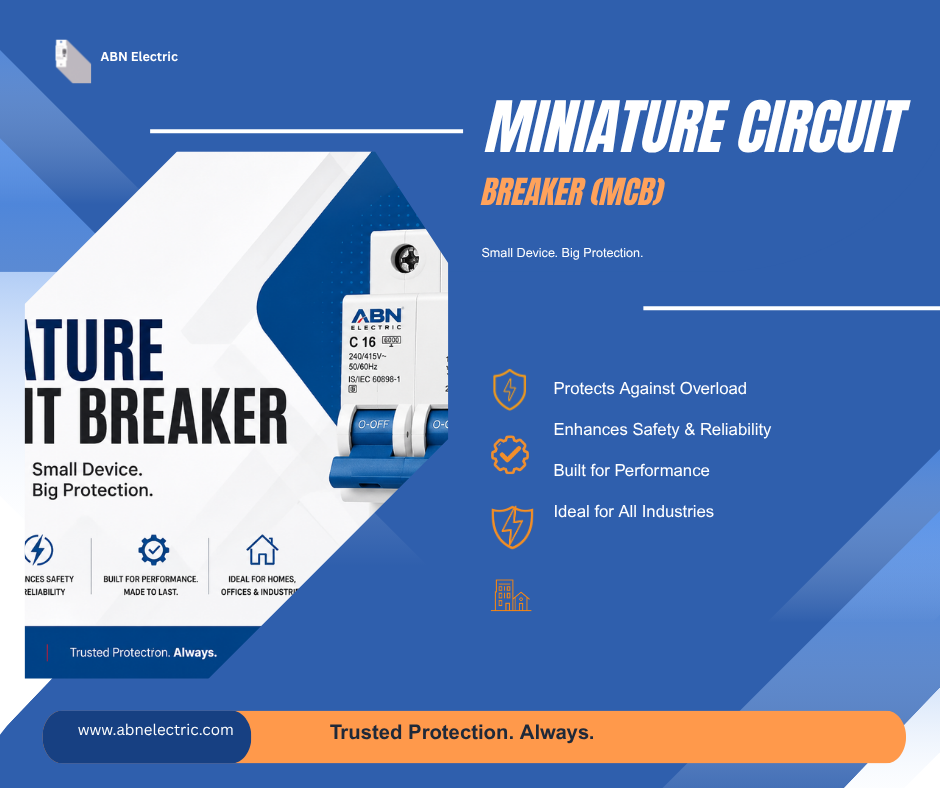
Electrical safety is a fundamental requirement for any residential, commercial, or industrial facility. Without reliable protection mechanisms, power overloads and short circuits can lead to severe equipment damage, costly downtime, and significant fire hazards. At the heart of modern electrical circuit protection lies a compact but highly critical device: the Miniature Circuit Breaker (MCB).
A Miniature Circuit Breaker (MCB) acts as the primary defense against electrical faults. By automatically disconnecting the power supply when an abnormality is detected, it prevents catastrophic failures. This guide covers everything you need to know about these essential electrical safety devices, from their fundamental working principles to their practical applications in power distribution safety. Read on to discover how to select the right components for your specific requirements.
What is a Miniature Circuit Breaker (MCB)?
Before exploring the technical details, it helps to understand the MCB full form and basic concept. MCB stands for Miniature Circuit Breaker. It is an electromechanical device designed to automatically switch off an electrical circuit during an abnormal condition, such as an overload or a short circuit.
Unlike traditional fuses that must be replaced after a single fault, an MCB can simply be reset once the fault is cleared, making it a highly convenient and reliable low voltage circuit breaker. As vital electrical panel components, they ensure continuous residential electrical safety and protect sensitive industrial equipment from unexpected power surges.
The MCB Working Principle Explained
The MCB working principle relies on two distinct mechanisms to handle different types of electrical faults: thermal operation and magnetic operation.
For overload protection, the device utilizes a bimetallic strip. When excess current flows through the circuit for a prolonged period, the bimetallic strip heats up and bends. This bending action eventually triggers the trip mechanism, safely disconnecting the circuit.
For short circuit protection, the device relies on an electromagnetic coil. If a massive surge of current occurs suddenly, the coil generates a strong magnetic field that instantly pulls a plunger, breaking the circuit in a fraction of a second. This dual-action design allows the Miniature Circuit Breaker (MCB) to respond accurately to both slow-building overloads and instant short circuits.
Types of MCB
Not all electrical loads behave the same way, which is why there are different types of MCB designed for specific applications. The classification is primarily based on their tripping characteristics:
- Type B: Trips at 3 to 5 times the rated current. These are ideal for residential electrical safety, protecting lighting circuits and standard household appliances where switching surges are small.
- Type C: Trips at 5 to 10 times the rated current. These are commonly used for commercial and industrial applications involving inductive loads, such as small electric motors and fluorescent lighting.
- Type D: Trips at 10 to 20 times the rated current. These heavy-duty industrial circuit breakers are reserved for equipment with very high starting currents, including X-ray machines, large winding motors, and heavy welding equipment.
Understanding the various circuit breaker types is crucial for ensuring proper equipment operation without experiencing nuisance tripping.
MCB vs Fuse: Key Differences
When comparing an MCB vs fuse, the advantages of modern circuit breakers become clear. Fuses are simple sacrificial devices. Once a fuse melts to break a faulty circuit, it must be completely replaced. This causes extended downtime and requires you to keep spare fuses on hand.
A Miniature Circuit Breaker (MCB), on the other hand, is completely reusable. When it trips, a simple flip of the switch restores power after the fault is resolved. Additionally, MCBs offer a safer operational interface, as the live electrical components are entirely enclosed. They also provide better sensitivity and faster reaction times to overcurrents, making them the superior choice for modern electrical circuit protection.
MCB Applications
Because of their reliability and compact size, MCB applications span a wide variety of environments:
- Residential: Protecting home wiring, lighting circuits, air conditioners, and kitchen appliances from power surges.
- Commercial: Safeguarding office lighting, IT server rooms, and HVAC systems where consistent uptime is critical.
- Industrial: Serving as dependable industrial circuit breakers for motor control centers, heavy machinery, and automated manufacturing lines.
For specialized industrial needs, partnering with a trusted provider like ABN Electric ensures you have access to high-quality MCB solutions that meet stringent safety standards.
Benefits of Using a Miniature Circuit Breaker (MCB)
Integrating MCBs into your electrical infrastructure provides several distinct advantages:
- Enhanced Safety: They eliminate the need to manually handle exposed electrical wires when replacing blown fuses.
- Automatic Operation: Their fast, automated response significantly reduces the risk of electrical fires.
- Cost Efficiency: While the initial investment might be slightly higher than fuses, their reusability and reduced downtime make them highly cost-effective over time.
- Clear Fault Indication: The operating knob clearly shows when a circuit has tripped, making troubleshooting simple and fast.
MCB Selection Guide: Choosing the Right Device
Following a proper MCB selection guide guarantees that your electrical systems remain safe and functional. Consider the following factors:
- Current Rating: Calculate the total normal operating current of your circuit and select a breaker with a slightly higher rating to avoid nuisance tripping.
- Tripping Curve: Choose between Type B, C, or D based on the nature of your electrical load (resistive vs. inductive).
- Breaking Capacity: Ensure the breaker can safely interrupt the maximum potential short-circuit current that could occur in your system. Options like ABN Electric’s breakers offer high short-circuit capacities (up to 10kA for specific models).
- Certifications: Always look for recognized safety standards, such as UL or non-UL options depending on your local regulatory requirements.
Common Mistakes to Avoid When Selecting MCBs
Many technicians and buyers make critical errors when sourcing overload protection devices. A frequent mistake is installing a Type C or D breaker in a standard residential home, which can delay tripping during a fault and cause a fire. Another common error is ignoring the breaking capacity; a breaker with a lower capacity than the potential fault current can literally explode during a severe short circuit. Lastly, relying on unverified brands compromises safety. Always source your electrical panel components from established manufacturers with proven track records.
Secure Your Systems with ABN Electric
When it comes to protecting your valuable infrastructure, cutting corners is never an option. A high-quality Miniature Circuit Breaker (MCB) is the backbone of reliable power distribution safety. ABN Electric stands out as a trusted provider of MCB solutions and isolators, offering a comprehensive range of UL and non-UL products designed for absolute safety, performance, and long-term reliability.
Whether you need a 1-pole breaker for a residential project or a heavy-duty 4-pole isolator for an industrial facility, ABN Electric has the industry expertise and premium components to meet your needs. Upgrade your electrical systems today—contact ABN Electric for expert consultations, product inquiries, and top-tier circuit protection solutions.
Frequently Asked Questions (FAQs)
What is the primary function of a Miniature Circuit Breaker (MCB)?
A Miniature Circuit Breaker (MCB) is an automatic switch designed to protect an electrical circuit from damage caused by excess current. It quickly disconnects the power supply during an overload or short circuit, preventing electrical fires and equipment damage.
How do I know if my MCB has tripped?
When an MCB trips, the switch knob flips from the “ON” position to the “OFF” or center position. This visual indicator makes it incredibly easy to identify which specific circuit in your distribution board has experienced a fault.
Can I replace a fuse with an MCB?
Yes, replacing an outdated fuse box with MCBs is highly recommended. An MCB offers faster response times, greater sensitivity, and the convenience of simply resetting the switch after a fault, vastly improving your overall electrical safety.
What causes a Miniature Circuit Breaker (MCB) to trip constantly?
Constant tripping usually points to an overloaded circuit (too many appliances running simultaneously), a persistent short circuit in the wiring, or a faulty appliance. It can also indicate that the breaker itself is wearing out and requires replacement by a qualified technician.
What is the difference between an MCB and an MCCB?
While both are circuit breakers, an MCB (Miniature Circuit Breaker) is typically used for low-voltage, low-current applications (up to 125A). An MCCB (Molded Case Circuit Breaker) is designed for much higher current ratings (up to 2500A) and is predominantly used in heavy industrial environments.
How long does a standard MCB last?
Under normal operating conditions, a high-quality MCB from a reputable provider like ABN Electric can last for several decades. However, its lifespan can be reduced if it is frequently subjected to severe short circuits or harsh environmental conditions.