
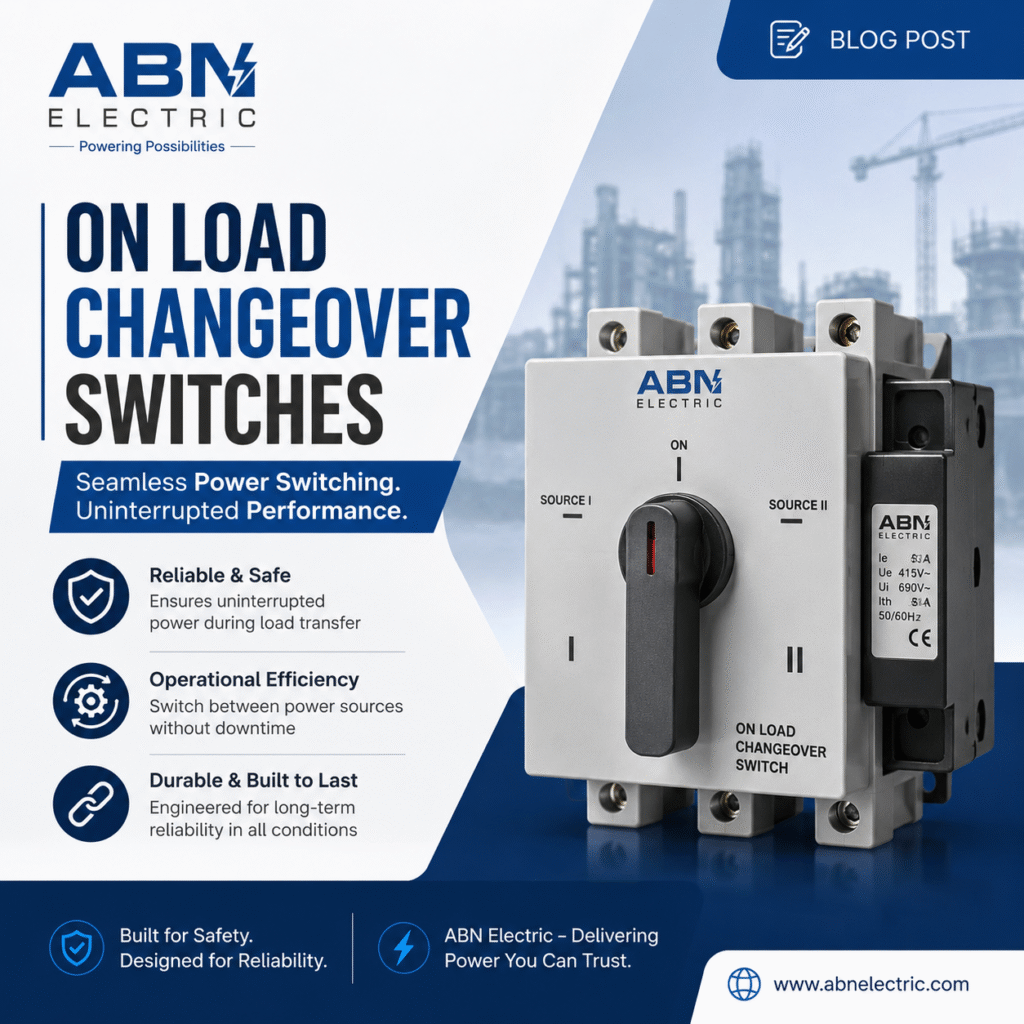
Power interruptions can cause operational downtime, equipment damage, and productivity losses. This is why many facility managers ask whether on load changeover switches operate automatically when the primary power source fails.
The short answer is that it depends entirely on the specific type of switch you install. While some on load changeover switches require human intervention, others can detect a power failure and switch power sources automatically. Choosing the right electrical power transfer solutions is critical for keeping your operations running smoothly.
Quick Answer: Do On Load Changeover Switches Operate Automatically?
Quick answer: Not all on load changeover switches operate automatically. They come in three main configurations: manual, motorized, and automatic. A manual changeover switch requires an operator to physically move a handle. A motorized changeover switch uses an electrical motor but may still require remote activation. An automatic changeover switch (ATS) detects power failures and shifts the load to a backup generator entirely on its own, without any human intervention.
What Are On Load Changeover Switches?
An on load changeover switch is a critical piece of electrical switchgear. It transfers an electrical load from a primary power source to a backup power system. Importantly, these electrical changeover switches safely perform this transfer while the circuit is “on load,” meaning power is actively flowing.
These devices prevent power from feeding back into the utility grid. This protects electrical workers and prevents severe equipment damage. In regions like Dubai, UAE, these switches are essential components of commercial electrical systems. They ensure uninterrupted power supply for hospitals, factories, and data centers.
How On Load Changeover Switches Work
The basic function of a power transfer switch is simple. It safely disconnects the facility from the primary utility power. Then, it connects the facility to a secondary power source, like a generator.
The switch physically isolates the two power sources. This prevents short circuits and dangerous phase clashes. Depending on the design, this power source switching can happen in milliseconds or take several minutes. High-quality switches, like the modular on load changeover switches offered by ABN, feature quick make-and-break mechanisms. This ensures a fast, safe, and reliable transition of power.
Manual vs Motorized vs Automatic Changeover Switches
Understanding the different configurations is vital for industrial power distribution. Let’s compare the three main types of load transfer switches.
Manual Changeover Switch
A manual changeover switch requires a person to physically operate a lever or handle. When the main power fails, an operator must walk to the switchgear panel and manually shift the load. This is the simplest and most cost-effective option. However, it results in a longer power outage while waiting for human intervention.
Motorized Changeover Switch
A motorized changeover switch includes an electric motor attached to the switching mechanism. This allows operators to change power sources remotely via a control panel or push button. It reduces the need to physically interact with the switchgear enclosure. However, it still generally requires someone to initiate the transfer process.
Automatic Changeover Switch
An automatic changeover switch offers complete automation. It uses intelligent controllers to monitor the incoming utility voltage. When a power failure occurs, it automatically starts the backup generator. Once the generator stabilizes, the switch transfers the load automatically. When utility power returns, it switches back and shuts down the generator.
Comparison Table: Changeover Switch Types
| Feature | Manual Changeover Switch | Motorized Changeover Switch | Automatic Changeover Switch |
| Automation Level | None (Fully Manual) | Semi-Automatic (Remote) | Fully Automatic |
| Response Time | Slow (Depends on operator) | Moderate (Push-button speed) | Very Fast (Seconds) |
| Human Intervention | Required locally | Required remotely | Not required |
| Cost | Low | Medium | High |
| Applications | Small businesses, residential | Factories, large buildings | Hospitals, data centers, airports |
| Reliability | High mechanical reliability | High | Extremely High |
What Happens During a Power Failure?
When utility power fails, the facility experiences an immediate blackout. If you rely on manual load transfer switches, operations stop until an operator manually switches the power.
If you have an automatic system, the process looks like this:
- The controller detects the voltage drop from the main utility grid.
- The system sends a starting signal to the backup generator.
- The generator reaches the correct voltage and frequency.
- The automatic changeover switch seamlessly shifts the load to the generator.
- The facility resumes normal operations with minimal delay.
Benefits of Automatic Load Transfer
Using an automatic generator changeover switch provides several distinct advantages for industrial operations.
First, it significantly reduces operational downtime. Automatic systems restore power in seconds. Second, it improves safety. It removes the need for personnel to operate high-voltage electrical industrial equipment in the dark.
Third, it protects sensitive equipment. Automated power transfer solutions prevent voltage spikes from damaging machinery. Finally, it provides peace of mind. Facility managers know their backup power systems will activate seamlessly, even if the building is unoccupied.
Common Applications in Dubai and UAE
Dubai’s rapid infrastructure development demands robust switchgear solutions UAE. Different facilities require different levels of power automation.
- Commercial Buildings: Office towers use motorized and automatic switches to keep elevators and HVAC systems running.
- Hospitals: Healthcare facilities require fully automated uninterrupted power supply systems to protect patient lives.
- Industrial Plants: Manufacturing facilities use heavy-duty on load changeover switches to prevent costly production halts.
- Data Centers: These facilities rely on instant power transfer to protect critical servers and prevent data loss.
As a trusted provider of electrical safety systems in Dubai, ABN understands these local requirements perfectly.
How to Choose the Right Changeover Switch
Selecting the right switchgear involves evaluating your specific operational needs. You must determine the correct amperage rating for your electrical load. ABN offers robust switches ranging from 63A up to 3150A to cover diverse applications.
Next, decide on the automation level. Ask yourself: Can your business survive a 15-minute outage? If not, an automatic switch is necessary. Finally, consider space constraints. Modular pole designs and compact constructions help save valuable space inside electrical switchgear Dubai panels.
Get the Right Power Transfer Solution by consulting with experienced professionals who understand regional compliance standards.
Key Safety and Compliance Considerations
Electrical safety systems must comply with strict international standards. High-quality on load changeover switches should adhere to EN/IEC/IS 60947-3 standards.
Ensure your switch features a robust handle with a padlock facility. This prevents unauthorized operation during maintenance. Additionally, switches with transparent windows allow operators to visually verify the contact positions. This ensures the handle position is visible even in dark switch rooms. Choosing compliant and well-designed equipment prevents electrical fires and fatal accidents.
Conclusion
So, does an on load changeover switch operate automatically? It absolutely can, provided you select an automatic changeover switch over a manual or motorized model. Automatic systems offer the fastest, safest, and most reliable response to power outages. They protect your revenue, equipment, and personnel from the negative impacts of unexpected blackouts.
Investing in high-quality switchgear is not just a regulatory requirement; it is a smart business decision. ABN is a leading manufacturer and provider of premium electrical infrastructure solutions serving Dubai and the UAE. We deliver durable, customized, and modular power distribution solutions tailored to your project needs.
Contact ABN for Technical Consultation today. Talk to Switchgear Experts Today to ensure your facility remains powered, protected, and productive. Choose Reliable Electrical Infrastructure Solutions for total peace of mind.
Frequently Asked Questions (FAQs)
What is the main function of on load changeover switches?
On load changeover switches safely transfer an electrical load from a primary utility power source to a backup generator. They perform this transition while the electrical current is active, preventing back-feeding and protecting sensitive industrial electrical equipment from severe damage.
Can I upgrade a manual changeover switch to automatic?
Yes, in many cases, you can upgrade a manual system. By adding a motorized mechanism and an intelligent automatic transfer controller, you can convert existing manual switchgear into an automated system. However, consulting with switchgear experts is highly recommended.
What is the difference between an ATS and a manual changeover switch?
An Automatic Transfer Switch (ATS) detects power failures and shifts the power source without any human intervention. A manual changeover switch requires a human operator to physically move a handle to transfer the power load during an outage.
Are motorized changeover switches automatic?
No, motorized changeover switches are technically semi-automatic. They use an electrical motor to shift the contacts, allowing for remote push-button operation. However, they usually still require a human operator or an external control system to initiate the actual power transfer.