
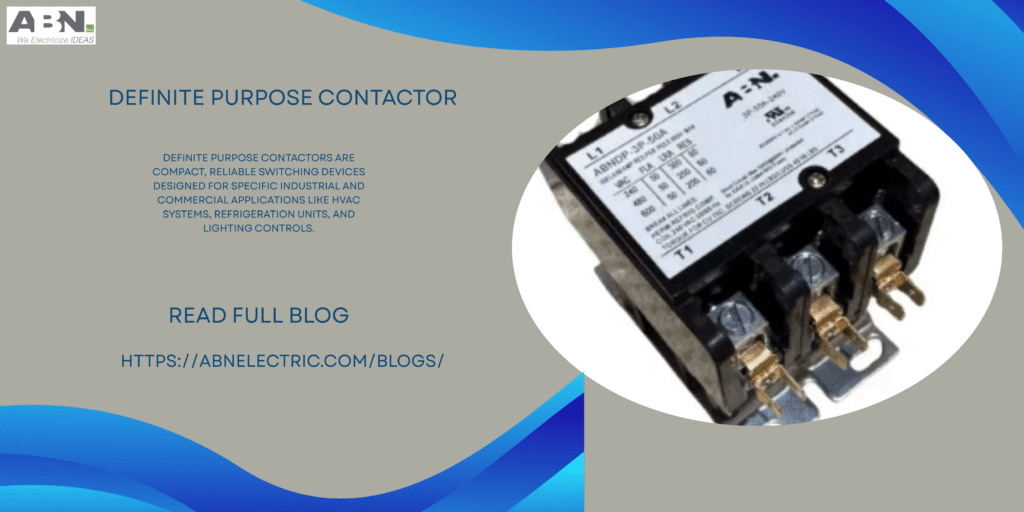
Electrical contractors and engineers working with HVAC and industrial systems rely on specialized components to ensure reliable operation. Among these critical components, the definite purpose contactor stands out as an essential switching device that controls high-power electrical loads with precision and durability. Understanding how these contactors function can help you make informed decisions about system design, maintenance, and troubleshooting.
This comprehensive guide explores the inner workings of definite purpose contactors, their applications across various industries, and why they’ve become the go-to choice for demanding electrical switching applications.
What Is a Definite Purpose Contactor?
A definite purpose contactor is a specialized electrical switching device designed to control specific types of electrical loads in commercial and industrial applications. Unlike general-purpose contactors, these devices are engineered for particular applications such as air conditioning systems, refrigeration units, lighting circuits, and motor control systems.
The “definite purpose” designation means these contactors are optimized for specific electrical characteristics, including voltage ratings, current capacity, and switching frequency. This specialization allows them to perform more reliably in their intended applications compared to generic switching devices.
These contactors typically feature robust construction with high arc-resistant materials, extended electrical and mechanical life cycles, and specialized contact configurations. Modern definite purpose contactors often exceed 250,000 electrical operations and 1,000,000 mechanical operations, making them ideal for high-frequency switching applications.
Core Components and Construction
Contact System
The heart of any definite purpose contactor lies in its contact system. These devices use silver-based contacts that provide excellent conductivity and arc resistance. The contacts are designed in either normally open (NO) or normally closed (NC) configurations, depending on the application requirements.
The contact mechanism operates through electromagnetic force. When the coil is energized, it creates a magnetic field that pulls the movable contacts toward the stationary contacts, completing the electrical circuit. The contact pressure and alignment are carefully engineered to ensure reliable connection and minimize contact wear.
Coil and Magnet Assembly
The electromagnetic coil serves as the control mechanism for the contactor. Available in various voltage ratings including 24V, 120V, 240V, and 480V, the coil creates the magnetic field necessary to operate the contact system. The coil assembly includes the magnet core, which focuses and amplifies the magnetic field for efficient operation.
Enclosure and Mounting
High-quality definite purpose contactors feature enclosures made from arc-resistant phenolic resin or similar engineered materials. These materials provide superior insulation properties and mechanical strength compared to standard plastic housings. The enclosure design allows for multiple mounting orientations without affecting performance.
How Definite Purpose Contactors Operate
Basic Operating Principle
The operation of a definite purpose contactor follows a straightforward electromagnetic principle. When control voltage is applied to the coil, it generates a magnetic field that attracts the movable contact assembly. This magnetic force overcomes the spring tension holding the contacts in their normal position, causing them to close and complete the electrical circuit.
When the coil is de-energized, the magnetic field collapses, and spring tension returns the contacts to their normal position, opening the circuit. This simple yet reliable mechanism allows for precise control of high-power electrical loads through low-power control circuits.
Switching Sequence
The switching sequence in a definite purpose contactor occurs in milliseconds. During closing, the movable contacts accelerate toward the stationary contacts, making initial contact with sufficient force to establish a reliable connection. The final contact position includes additional compression to ensure stable electrical connection under varying load conditions.
During opening, the contacts separate rapidly to minimize arcing time. The contact gap increases quickly to extinguish any arc that forms during the switching process. This rapid separation is crucial for maintaining contact life and preventing damage to the electrical system.
Pole Configurations and Applications
Single-Pole Contactors
Single-pole definite purpose contactors control one electrical circuit and are commonly used in lighting applications, single-phase motor control, and heating elements. These contactors offer simple installation and cost-effective control for basic switching needs.
Two-Pole Contactors
Two-pole configurations provide control for two separate circuits or single-phase applications requiring control of both hot conductors. These contactors are frequently used in residential and light commercial HVAC systems, particularly for controlling compressors and fan motors.
Three-Pole Contactors
Three-pole definite purpose contactors are designed for three-phase motor control and are widely used in industrial applications. These contactors simultaneously control all three phases of a three-phase motor, ensuring balanced operation and preventing single-phase conditions that could damage equipment.
Four-Pole Contactors
Four-pole contactors provide control for three-phase systems with neutral switching or can control two separate two-pole circuits. These configurations are common in commercial HVAC systems and industrial applications requiring neutral switching for safety or code compliance.
HVAC System Applications
Air Conditioning Systems
In air conditioning systems, definite purpose contactors control compressor motors, condenser fans, and evaporator fans. The contactor’s ability to handle high inrush currents makes it ideal for controlling hermetic compressor motors, which typically draw several times their running current during startup.
The reliable switching characteristics of these contactors ensure consistent system operation and help prevent nuisance trips that could affect comfort and efficiency. Many HVAC-specific definite purpose contactors are designed to meet Air-Conditioning, Heating, and Refrigeration Institute (AHRI) standards.
Heat Pump Systems
Heat pump systems require precise control of multiple components including compressors, reversing valves, and auxiliary heating elements. Definite purpose contactors provide the reliable switching needed for these critical components, ensuring efficient operation in both heating and cooling modes.
Refrigeration Systems
Commercial refrigeration systems rely on definite purpose contactors to control compressors, evaporator fans, and defrost heaters. The contactor’s ability to handle frequent cycling makes it well-suited for refrigeration applications where components cycle on and off regularly based on temperature demands.
Industrial Applications
Motor Control Centers
In industrial motor control centers, definite purpose contactors serve as the primary switching device for individual motor circuits. These contactors integrate with overload protection devices and control circuits to provide complete motor protection and control.
Lighting Control Systems
Large-scale lighting systems in commercial and industrial facilities use definite purpose contactors to control banks of lights. The contactor’s ability to handle high inrush currents from lighting loads makes it ideal for controlling fluorescent, LED, and high-intensity discharge lighting systems.
Process Control Equipment
Manufacturing and process control systems use definite purpose contactors to control pumps, conveyors, and other automated equipment. The reliable operation and long service life of these contactors contribute to overall system reliability and reduced maintenance costs.
Advantages and Benefits
Extended Service Life
The robust construction and high-quality materials used in definite purpose contactors result in extended service life compared to general-purpose alternatives. With proper application and maintenance, these contactors can operate reliably for many years, reducing replacement costs and system downtime.
Application-Specific Design
The specialized design of definite purpose contactors for specific applications ensures optimal performance characteristics. This specialization results in better load handling, reduced maintenance requirements, and improved overall system reliability.
Cost-Effective Solution
While definite purpose contactors may have higher initial costs than general-purpose alternatives, their extended service life and reduced maintenance requirements often result in lower total cost of ownership. The prevention of premature failures and associated system downtime provides additional economic benefits.
Installation and Maintenance Considerations
Proper Sizing
Selecting the correct size definite purpose contactor is crucial for reliable operation. The contactor must be rated for the full load current of the controlled equipment, with additional capacity for inrush currents. Undersized contactors will experience premature failure, while oversized contactors may not provide reliable switching of light loads.
Environmental Factors
Installation environment affects contactor performance and service life. Factors such as ambient temperature, humidity, vibration, and electrical noise can impact operation. Proper enclosure selection and environmental protection help ensure reliable long-term performance.
Regular Maintenance
Routine maintenance extends contactor service life and prevents unexpected failures. Maintenance activities include visual inspection of contacts, cleaning of accumulated dust and debris, verification of proper mounting, and testing of coil operation.
Troubleshooting Common Issues
Contact Problems
Contact-related issues are the most common problems with definite purpose contactors. Symptoms include chattering, welding, or failure to make reliable connection. These issues often result from improper sizing, excessive load current, or environmental contamination.
Coil Failures
Coil failures can result from overvoltage, undervoltage, or excessive heat. Proper voltage selection and environmental protection help prevent coil-related problems. Regular monitoring of coil voltage and current can help identify potential issues before failure occurs.
Maximizing Performance in Your Applications
Understanding how definite purpose contactors work empowers you to make better decisions about system design, component selection, and maintenance practices. These specialized switching devices offer superior performance and reliability when properly applied in their intended applications.
The key to successful implementation lies in proper selection based on load characteristics, environmental conditions, and application requirements. Working with qualified electrical contractors and following manufacturer guidelines ensures optimal performance and maximum service life.
For demanding HVAC and industrial applications, definite purpose contactors provide the reliability and performance needed to maintain critical systems. Their specialized design, robust construction, and proven track record make them an excellent choice for applications requiring dependable electrical switching.