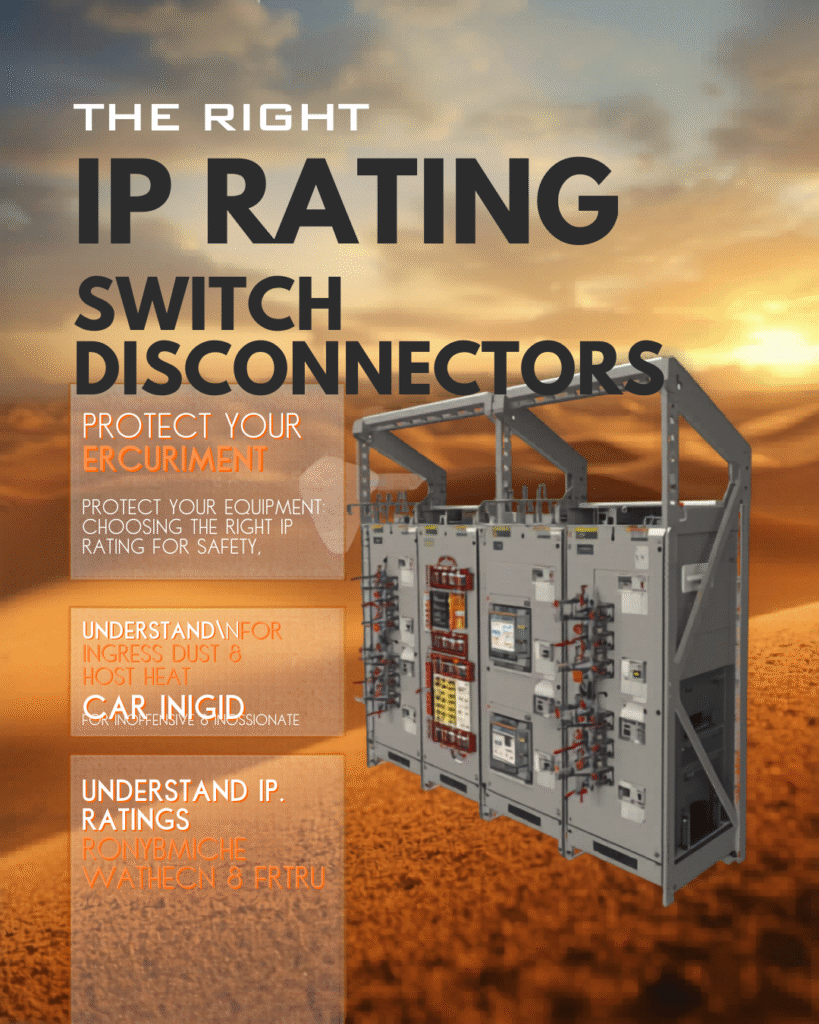
Engineers and procurement managers operating in the Middle East face some of the most unforgiving environmental conditions on the planet. From extreme summer temperatures exceeding 50°C to high humidity levels and relentless sandstorms, industrial power distribution systems must withstand severe operational stress. When planning infrastructure projects in the UAE, Saudi Arabia, Qatar, or Oman, selecting the appropriate IP rating for electrical equipment is not merely a compliance check—it is the baseline for operational safety and longevity.
Whether you are specifying control panels, transformers, or Switch Disconnectors, deploying inadequate protection guarantees premature failure, costly downtime, and severe safety hazards. The desert climate demands robust industrial switchgear protection. You need equipment that effectively seals out microscopic dust particles while preventing moisture ingress from coastal humidity.
This guide outlines exactly how EPC contractors and industrial buyers can navigate ingress protection codes to secure reliable outdoor electrical switchgear Middle East installations. By understanding regional environmental stressors and matching them to the correct protection classifications, you can ensure long-term electrical panel safety and compliance with international standards.
Understanding IP ratings (Ingress Protection) in electrical systems
The Ingress Protection (IP) rating system, defined by the IEC 60529 standard, classifies the degree of protection provided by mechanical casings and electrical enclosures against intrusion, dust, accidental contact, and water. For procurement professionals and engineers, interpreting the electrical enclosure IP rating is straightforward once you break down the two-digit system.
The first digit (ranging from 0 to 6) indicates the level of protection against solid objects, including tools, fingers, and microscopic dust. A rating of 6 means the enclosure is completely dust-tight. The second digit (ranging from 0 to 9) defines the level of protection against moisture, ranging from light condensation to high-pressure water jets and complete submersion. Understanding this baseline is crucial before evaluating the specific demands of your geographic location.
Why IP ratings are critical in Middle East environments
Operating heavy machinery and electrical systems in a desert climate introduces unique vulnerabilities. Microscopic sand particles carried by Shamal winds can easily bypass standard commercial enclosures. Once inside, this dust settles on conductive components, causing tracking, short circuits, and severe thermal insulation problems.
Furthermore, coastal regions like Dubai and Doha experience high humidity. When ambient temperatures drop at night, this moisture condensates inside poorly sealed enclosures, leading to rapid corrosion and electrical faults. Implementing proper electrical safety standards Middle East protocols requires equipment designed to block both fine particulate matter and aggressive condensation simultaneously.
Common IP ratings used in industrial switchgear (IP54, IP65, IP66, IP67)
Different operational environments dictate different levels of shielding. When configuring weatherproof switchgear solutions, you will primarily encounter the following ratings:
- IP54: Protects against limited dust ingress and water splashed from all directions. This is generally suitable for indoor industrial applications that are not exposed to direct weather or heavy washdowns.
- IP65: Offers complete dust-tight performance and protection against low-pressure water jets. This is the minimum standard for many outdoor applications.
- IP66: Completely dust-tight and protected against heavy seas or powerful jets of water. This is highly recommended for coastal installations.
- IP67: Dust-tight and capable of withstanding temporary immersion in water. You will typically find this used in highly specialized, low-lying, or flood-prone infrastructure.
Procuring equipment with certified dust and water protection IP65 IP66 IP67 is standard practice for heavy-duty regional projects.
How heat, sand, and humidity affect electrical switchgear
While an IP rating dictates physical ingress, it directly influences thermal management. Desert climate electrical protection must account for the fact that a completely sealed (IP66) enclosure traps internal heat generated by the electrical components. High temperature electrical equipment protection often requires advanced thermal mitigation, such as specialized venting, cooling systems, or solar shields, without compromising the IP integrity.
When sand enters a poorly rated enclosure, it restricts mechanical movement and acts as a thermal blanket. When combined with humidity, the dust turns into a conductive, corrosive mud that rapidly degrades internal components.
Choosing the right IP rating for different applications
Selecting the appropriate rating depends heavily on the specific deployment site:
- Indoor Controlled Environments: Substations with climate control can safely utilize IP41 or IP54 enclosures, balancing protection with natural heat dissipation.
- Outdoor Desert Environments: Solar farms and inland industrial plants should mandate IP65 enclosures to guarantee absolute dust exclusion.
- Coastal and Heavy Industrial Environments: Desalination plants, petrochemical refineries, and marine ports require IP66 to combat both salt-laden moisture and heavy washdowns.
Role of Switch Disconnectors in industrial safety systems
Within these heavily protected enclosures, the reliability of individual components dictates overall safety. Switch Disconnectors are fundamental to any industrial power distribution system, providing safe isolation of electrical circuits during maintenance, emergency shutdowns, or routine inspections.
Given the harsh conditions, switch disconnector applications in the Middle East demand robust, modular designs that can handle high current loads (from 25A up to 3150A) without failing under thermal stress. Whether housed in an open or sheet steel enclosure, these devices must feature quick make-and-break mechanisms and self-cleaning contacts to maintain performance if minor contamination occurs. Utilizing highly durable Switch Disconnectors ensures that maintenance crews can confidently isolate power, preventing arc flashes and hazardous electrical incidents.
Industry standards (IEC compliance and regional requirements)
Infrastructure projects in the Middle East rigorously enforce international safety codes. Equipment must comply with IEC standards switchgear requirements, specifically IEC 60947-3 for switches, disconnectors, and switch-disconnectors. Local utility authorities (such as DEWA, SEC, and Kahramaa) also impose stringent regional specifications. Ensuring your supplier provides equipment that meets these rigorous testing protocols guarantees that your infrastructure will pass inspections and perform reliably over its intended lifespan.
Best practices for selecting electrical switchgear in harsh environments
To safeguard your investments, partner with manufacturers who deeply understand regional challenges. ABN Electric is a trusted manufacturer and supplier of industrial electrical switchgear solutions, engineering products specifically designed to endure punishing environments.
When choosing your components, verify the modularity of the design, which allows for economical maintenance without replacing entire units. Incorporate door interlock and padlock facilities for enhanced safety. By sourcing from a specialized provider like ABN Electric, you ensure high engineering quality, absolute compliance with international standards, and long-term operational reliability.
Frequently Asked Questions (FAQs)
What is the minimum IP rating for outdoor electrical equipment in the Middle East?
For outdoor electrical installations in the Middle East, IP65 is generally the minimum recommended rating. It ensures the enclosure is completely dust-tight to protect against sandstorms and provides defense against low-pressure water jets from occasional rain or cleaning.
How do you protect Switch Disconnectors from extreme heat?
High-quality Switch Disconnectors should be housed in appropriate enclosures that utilize solar shields or forced ventilation. Selecting high-grade materials and self-cleaning contacts also ensures they do not degrade under severe thermal loads.
Is an IP67 rating necessary for desert environments?
IP67 provides protection against temporary submersion in water, which is rarely necessary for standard desert installations. IP65 or IP66 is usually sufficient for blocking dust and rain, whereas IP67 is reserved for flood-prone or specialized underground applications.
Can dust affect the performance of industrial switchgear?
Yes. Microscopic dust particles can coat conductive elements, reducing thermal dissipation, interfering with mechanical linkages, and causing short circuits if the dust becomes damp. A proper electrical enclosure IP rating prevents this intrusion.
Why should I choose ABN Electric for my switchgear needs?
ABN Electric manufactures highly durable, IEC-compliant power isolation products. Their equipment, including heavy-duty Switch Disconnectors, is specifically engineered for harsh environments, ensuring maximum safety, quick operation, and long-term reliability for demanding industrial applications.
Secure Your Industrial Operations with the Right Equipment
Choosing the correct IP rating for your electrical infrastructure is non-negotiable in the Middle East. Balancing the need for absolute dust and moisture exclusion with proper thermal management prevents catastrophic failures and ensures the safety of your personnel. By specifying the correct enclosure standards alongside high-quality internal components, you build a resilient, future-proof power distribution network.
If you are planning an industrial project in the region, do not leave your electrical panel safety to chance. ABN Electric provides rugged, precision-engineered Switch Disconnectors and electrical solutions tailored to the world’s most demanding environments. Contact the technical team at ABN Electric today to secure dependable, compliant, and durable electrical isolation solutions for your next major infrastructure development.